

Over the years, I’ve noticed that the women who make the most lasting changes aren’t necessarily the ones who follow the most rules. They’re the ones who learn how to recognize what their bodies need – and respond strategically. I’ve also noticed something else. The women I find most interesting are the ones who are willing to get to know themselves more deeply.
What makes you tick?
Why do you make the decisions you make? Which decisions are serving you – and which ones are quietly eroding your confidence, your energy, or your health?
The most resilient women I’ve worked with aren’t necessarily the ones who have everything figured out. They’re the ones who are willing to look honestly at themselves and make changes. Not necessarily in their careers. Many of these women are already proving themselves every day at work and in their homes. The work I’m talking about is different.
It’s the work of getting to know yourself.
-
Your body.
-
Your patterns.
-
The way you think about yourself.
-
And what you are truly capable of.
Resilience Isn’t a Leap
The women who make lasting changes are willing to dig down deep and make difficult changes in their lives – but usually not all at once.
One step at a time. The leaps don’t always last. The steps do.
I’ve seen this repeatedly in my work. Sometimes I’ll hear from a woman I worked with 20 years ago, or I’ll bump into someone in my local community, and she’ll tell me: “I’m still doing that thing we learned how to do all those years ago.”
Maybe she wasn’t even a long-term client. Maybe she read one of my articles. Maybe she saw one of my television programs. Maybe something I said stuck with her.
That’s the thing about change. It doesn’t always have to be dramatic to be meaningful. One small thing can lead to another small thing, and another. Eventually, it becomes a habit. Then it becomes part of your life. And that’s where real change happens.
I Know What It’s Like to Get Off Track
I’ve done it myself.
When I was caring for my husband, I had a team of caregivers coming into our home as part of what I called my “hospital at home.” One of the caregivers had a good friend who owned a donut shop. Every so often, he would bring in a huge box of donuts when he came to start his evening shift. Now, I grew up eating donuts. My mother made wonderful European-style donuts with the freshest ingredients, and they were delicious. But as an adult, I rarely ate them.
Until one evening. It had been a long, grueling day. The caregiver arrived with the donuts, and I found myself thinking, I can’t say no. So, I ate one. It tasted good.
Sweet. Fatty. Melt-in-your-mouth good. And then I ate another one. I knew exactly what I was doing. And you know what? I didn’t beat myself up about it. I got back on track.
I haven’t had a donut since. I don’t even have an interest in having one. That, too, is resilience.
Knowing how to get back on track.
Life is going to knock us off our routines. Stress happens. Travel happens. Illness happens. Grief happens. Sometimes we’re exhausted and we make a choice we wouldn’t normally make.
There’s nothing to regret or repent for.
-
Notice it.
-
Acknowledge it.
-
Then ask yourself:
What do I need to do next to get back on track?
Sometimes you can do that on your own. Sometimes you need another professional, a team, or simply a well-meaning friend who cares enough about you to help you see what you can’t clearly see yourself. Support is especially important in the beginning, because it’s very easy to fall back into old patterns.
So, what are some signs that your resilience may be running on empty?
4 Signs Your Resilience May Be Running on Empty
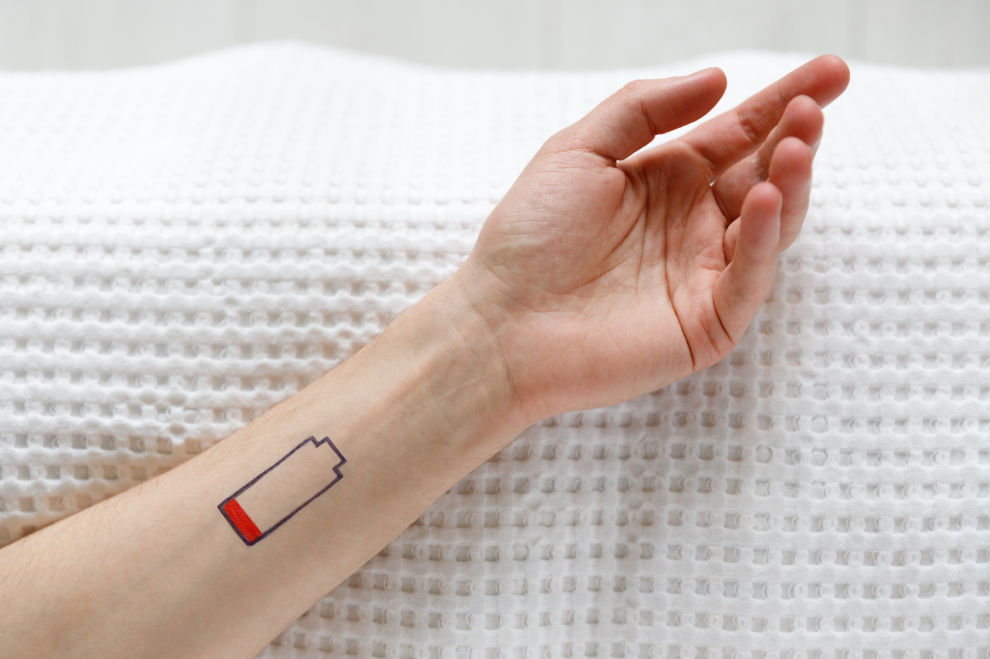
1. You’re always recovering from something.
Maybe it’s a cold. Maybe it’s an injury. Maybe you’re simply tired all the time and can’t seem to catch up. Your body may be telling you that you’re not giving yourself enough time to recover. I’m all for being active and productive well into our
our 60’s, 70’s and beyond. But we’ve also lived a lot. We’ve taken in a lot. We’ve carried responsibilities, expectations, relationships, careers, families and experiences.
Recovery isn’t laziness.
Recovery is part of resilience.
Your body needs time to process, repair and recuperate – even from normal daily activity. And sometimes the older and wiser we become, the more important it is to respect that.
2. You’re trying to be who you used to be.
You may still be perfectly capable of doing what you’ve always done.
The question is:
Do you still want to?
There’s a difference.
You may have the capacity to host the same event, work the same hours, maintain the same schedule, or take on the same responsibilities. But does that life still fit who you are today? Your dreams may have changed. Your priorities may have changed. Your body may have changed. You may simply have changed. That’s not failure – that’s called growth. It’s okay to change your mind at any age.
Instead of asking, “What used to work for me?”
Ask:
“What will serve me now?”
3. Your daily rhythms are all over the place.
You’re eating at different times every day. Going to bed at wildly different hours. Waking whenever you happen to wake. Some days you eat well. Other days you realize at 4 PM that you’ve barely eaten. Your body likes rhythm. It operates according to biological cycles called your circadian rhythym – the roughly 24-hour cycle that influences sleep, hormones, metabolism, and many other functions. That doesn’t mean every day has to look exactly the same.
And it certainly doesn’t mean your food has to be boring. You can have variety in the foods you choose the colors on your plate, the textures, the way you prepare them and the flavors you enjoy.
But your body benefits from some consistency in when you eat, sleep, wake and recover. Think of rhythm as a form of stability. Your body doesn’t need perfection. It needs signals it can count on.
4. You’re doing too much – and you’ve convinced yourself it’s normal.
You’ve always done it this way. You’ve always hosted the annual party. You’ve always been the one everyone calls. You’ve always said yes. And because you’ve been doing it for years, it feels normal. But normal doesn’t necessarily mean healthy. Sometimes resilience means saying no. Sometimes it means changing a tradition. Sometimes it means asking someone else to take something off your plate. And sometimes it means admitting that something you once loved no longer fits your life.
Your daily routines can provide continuity and stability. But your obligations are different. You want to create boundaries around the things that drain you – and make more room for the things that support your health, energy, and sense of purpose. The difficult part is that sometimes we don’t even know which is which. And sometimes simply saying something out loud to another person gives us the clarity to recognize:
Something needs to change.
Resilience Is a Practice
Resilience isn’t something you either have or don’t have. It’s something you practice. It’s noticing when you’re depleted. It’s recognizing when an old strategy no longer works. It’s listening when your body gives you information. It’s making a different choice. And when you inevitably get off track, it’s knowing that you haven’t failed. You simply have another opportunity to take the next step.
That’s what I’ve seen in women repeatedly throughout my career. The woman who makes the biggest changes isn’t necessarily the woman who makes the biggest commitment on Monday morning. She’s often the woman who makes one small change, keeps going, adjusts when necessary, and learns how to begin again.
-
One step.
-
Then another.
-
And another.
-
Until eventually, those steps become the way she lives.
A question for you:
Where is your resilience running a little low right now?
Do you need more recovery?
A different rhythm?
A boundary?
A change in an old pattern?
Or simply permission to stop trying to be the person you used to be?
You don’t have to change everything.
Start with the next step.