
Let’s face it we’re at home more these days which means either you’re eating more processed/convenience foods, ordering more take-out or, and I hope this is the case, you’re cooking up a storm in your very own kitchen.
Cooking your own home cooked meals is quite easy, all you have to do is: Plan, Shop, Cook and Enjoy!
Let’s explore these tips on how to make your home cooking easier a little more:
- Plan. I can’t overemphasize how important planning is. If you look ahead you will not fall prey to eating whatever happens to be available – healthy or not – when you are hungry. To help you get into the planning mood you can start by looking at recipes in books or online. You can also get recipe ideas from friends, family, cooking shows or food blogs. Doing this will help you start creating your shopping list for the week.
- Shop. Planning helps you create a solid shopping list which helps you manage your budget better. Buy foods on special that way you’ll be eating seasonally as often these food items are more readily available at that particular time of the year. It may be different where you live but here in my neck of the woods – asparagus seems to be plentiful this time of year causing prices to be lower than in the height of the summer.
 Also, having a shopping list helps you from under-buying causing you to make too many trips back and forth to the grocery store – wasting time and energy. And then there’s over-purchasing where you often end up throwing food away – that’s such a waste on so many levels. When you were growing up I’m sure you heard your mother say: “finish your plate, there are people starving.” Unfortunately, that is a reality in many parts of the world, but eating because others are starving really doesn’t make sense. But thinking of it on a deeper level – by not wasting food you are respecting and giving thanks for what you are lucky to have.
 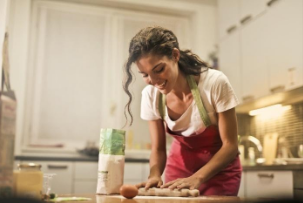 Cook. Make your cooking environment pleasant and not chaotic. Of course, having all necessary ingredients and supplies at hand is key but also having a peaceful atmosphere is essential. Play music when preparing your meals. Having tools accessible and easy to find is half the battle. Make sure you are using the best ingredients available from spices, herbs, oils to your proteins, vegetables and grains.
Just as over-purchasing is not the best strategy, so too is cooking too much food. Leftovers are good to a certain extent but if food sits around for more than 2 days it starts to lose much of its nutritional value and quality. Decide from the get go to eat as fresh as possible.- Enjoy. Enjoy your meals with the warmth and caring of a lovely
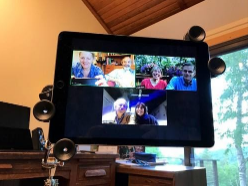 conversation. Whether you’re having dinner with your family at home or finding yourself going solo you can always make it even more special. Over the last week I found myself picking up the phone when my delicious dinner stood before me. It was a spontaneous impulse and an enjoyable experience – it felt as though I was having friends over for dinner. Of course, it may not be everyone’s cup of tea to engage in “distance dining”, but it sure can be fun. Instead of the phone you can always use Zoom, Facetime, Whatsapp. In these times, we need to reach out and feel connected in whatever we can.








 4. Make Mine Veggie:


